EASY SALE Redlands 4 Bedrooms 3 Bath Well Kept Pool & Spa Home In The Hills With Easy Access To Freeways. This Home Features Views From The Living Room And Kitchen, Ceramic Tile Floors And Newer Carpet Through-Out. Entertaining Is Made Easy With A New Bbq And Bar Near The Pool. Not A Short Sale Or REO
Showing posts with label area. Show all posts
Showing posts with label area. Show all posts
Sunday, March 7, 2010

1963 Bayberry Drive www.andycleaves.com Riverside Area Homes for Sale Realtor
Newer 4 Bedroom 2 Bath Upgraded Home With Many Extras Including Gourmet Kitchen With Granite Counters, Carpet And Tile And More
4005 Sequoia www.andycleaves.com Riverside Area Homes For Sale Realtor
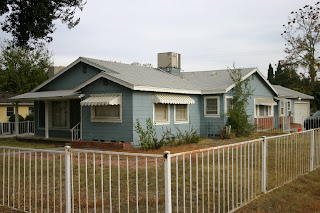
Riverside 4 Bedroom 2 Bath Corner Lot See More @ www.andycleaves.com

Monday, February 15, 2010
Thursday, January 7, 2010
Tuesday, January 5, 2010
Saturday, January 2, 2010
Thursday, December 31, 2009

Thursday, November 5, 2009
4 Minutes Of Guidance For Soon-To-Be Real Estate Investors
"Most of the biggest real estate fortunes were not made in good times, but in bad times like this" Barbara Corcoran reminds us in this talk with NBC.
It's important perspective for Americans wondering how to invest in foreclosed properties without losing their cash or their credit rating.
In the 4-minute interview, Corcoran quips on the basics and the essentials of foreclosure investing,
- "Everyone who loses their shirt loses it somewhere else."
- "Every big shark started small."
- "The house on the corner sets the tone for the block."
She also lends some personal perspective to rent rolls, the cost of losing a tenant, and finding a good business partner.
Banks are anxious to sell their foreclosed homes and that makes this an ideal time for shrewd real estate investors. If you're new to the game, watch the video and take good notes.
Wednesday, November 4, 2009
How To Test A Home Smoke Alarm

Many of these deaths occurred in homes with no smoke detectors or no working smoke detectors.
When detectors fail, it's often because its batteries are dead or missing. Therefore, make a point to test your smoke detectors annually.
Here's how to do it:
- Have somebody go to the farther point of the house from the detector
- Push and hold the testing button for 5 seconds to activate the alarm
- Confirm the alarm is audible by all parties
You should also buy smoke detector aerosol and spray it directly into the device. This will simulate a real fire. If the alarm doesn't sound, the smoke detector will fail when it's needed most. Replace the device immediately -- even if it beeps when you push the Test button.
Smoke detectors are inexpensive and essential. Make sure the devices in your home are working properly. Test them at least once per year.
Tuesday, November 3, 2009
Higher Home Prices Ahead, Says The Pending Home Sales Index

As reported by the National Association of Realtors®, the Pending Home Sales Index posted its 8th consecutive monthly gain in September.
It's the longest winning streak in the history of the index and Pending Home Sales are now at their highest levels since December 2006.
A Pending Home Sale is a home under contract to sell, but not yet closed. It's the precursor to an Existing Home Sale.
Trade group data shows that nearly 80 percent of "pending" homes close within 2 months. The majority of those remaining close within months 3 and 4.
When the Pending Home Sales Index rises, it tells us that market activity has picked up. September's data confirms what we've been noticing since February -- the Buyers Market is ending.
With more homes under contract in the marketplace, homebuyers typically face one or more of the following:
1. Competitive, multiple-offer situations
2. Reduced purchase price leverage over sellers
3. Fewer seller concessions
Therefore, if you're buying a home in the next several months, know that the 8-month run in Pending Sales will lead to a run in closed sales. It should result in higher home prices, too
Indeed, we're already seeing it.
Monday, November 2, 2009
How To Test A Home Smoke Alarm
Many of these deaths occurred in homes with no smoke detectors or no working smoke detectors.
When detectors fail, it's often because its batteries are dead or missing. Therefore, make a point to test your smoke detectors annually.
Here's how to do it:
- Have somebody go to the farther point of the house from the detector
- Push and hold the testing button for 5 seconds to activate the alarm
- Confirm the alarm is audible by all parties
You should also buy smoke detector aerosol and spray it directly into the device. This will simulate a real fire. If the alarm doesn't sound, the smoke detector will fail when it's needed most. Replace the device immediately -- even if it beeps when you push the Test button.
Smoke detectors are inexpensive and essential. Make sure the devices in your home are working properly. Test them at least once per year.
Friday, October 30, 2009
5 Purchases To Make In A Down Economy
Down economies reduce consumer spending, creating a bind for retailers. As excess inventory collects dust, companies have little choice but to drop prices in hopes of selling more product.
For the bargain shopper with extra cash right now, there are some terrific deals to be had out there. This 4-minute piece from NBC's The Today Show highlights a few of them.
- Wines over $25 per bottle reduced up to 50%
- High-quality diamonds reduced up to 30%
- Summer rental homes reduced up to 50%
Furniture is another discounted item.
Now, these aren't everyday-type purchases, but when the economy turns around for good, the bargain-priced items highlighted in the video are expected to return to their former price levels.
If you have the means, therefore, consider taking advantage while costs are down.
Thursday, October 29, 2009
What The Media Missed In September's New Home Sales Report

Today is one of those days.
After the September New Home Sales report showed sales volume down from August, the mainstream media jumped on the story:
- New Home Sales fall a surprising 3.6%
- Surprise Drop In New Home Sales
- Stocks slide as New Home Sales fall
But the headlines miss the point, somewhat. Yes, home sales volume is important to housing, but it's not as important as home supply.
A deeper look at the New Home Sales data reveals an interesting comparison point:
- New home sales volume fell 3.6%
- The number of new homes available for sale fell 3.8%
In other words, sales outpaced supply -- a running theme this year and a positive signal for housing.
Since peaking in January 2009, the supply of newly-built homes has now dropped by 40 percent. The average sale price is up 15% over the same period.
This is why you can't get your real estate news from the headlines. You have to dig a little bit deeper to get the real story.
September's New Home Sales report was plenty strong. The housing market recovery continues.
Wednesday, October 28, 2009
Home Values In 95% Of Case-Shiller Markets Are Improving Year-To-Year

For August, the Case-Shiller Index showed annual home values improving across 19 of 20 U.S. markets. It's the first time in 3-plus years that the benchmark housing index has shown such strength.
According to a Case-Shiller Index spokesperson, "The rate of annual decline in home price values continues to improve."
It's yet another sign that housing may have already bottomed.
However, just because the Case-Shiller Index shows a stabilization in home values, that doesn't necessarily make it true. This is because real estate happens on the local level and the Case-Shiller Index is more "national". It tracks data in just 20 U.S. cities.
Homeowners everywhere else are unaccounted for.
Furthermore, even within the 20 tracked Case-Shiller markets, there's no allowance for the natural sub-markets that exist. Some neighborhoods under-perform and some neighborhoods out-perform.
Case-Shiller treats them all the same.
Despite its imperfections, though, the Case-Shiller Index remains a helpful, broader measurement of U.S. real estate. Economists believe that housing led the U.S. into the recession and they believe housing will lead us out, too.
If that's true, August's Case-Shiller data is another step in the right direction.
Tuesday, October 27, 2009
Falling Home Supplies Mean More Multiple-Offer Situations For Buyers

At the current sales pace, existing home inventories would sell out in 7.8 months -- 30 percent faster versus November 2008.
For a 10-month window, that's a major housing supply reduction and it helps to explain why multiple-offer situations have been so common lately.
Moreover, the same report from NAR showed sales activity reaching its highest point since July 2007, too.
If you're looking for evidence that the long-standing Buyers Market is ending, this month's Existing Home Sales report might be it.
Even median sales prices -- typically dragged lower by distressed and foreclosed properties -- declined at its slowest pace in a year. The market may have turned a corner.
Home prices are rooted in the basic economics of supply and demand.
- When supply outweighs demand, home prices fall
- When supply lags demand, home price rise
Since March 2009, the market has been moving in the right direction. Low mortgage rates, ample housing supply and a first-time home buyer tax credit fueled buy-side demand so that home prices are now rising in many U.S. markets.
If home supplies stay on this path into 2010, expect home prices to rise even more.
Monday, October 26, 2009
Government : Home Values Edged Lower In August

According to the government, home values edged lower last month.
The Federal Housing Finance Agency's Home Price Index report shows values down by 0.3 percent from the month prior -- the index's first down month since April.
The Home Price Index is based on the value of homes financed via Fannie Mae or Freddie Mac and, in this sense, the FHFA Home Price Index is more of a "national" real estate index than its private-sector cousin, the Case-Shiller Index.
But like the Case-Shiller, the HPI is as notable for what it specifically excludes as for what it includes. Most notably, the Home Price Index doesn't account for homes meeting any of the following descriptions:
- Is considered new construction
- Is a multi-unit property
- Is financed by an entity other than Fannie Mae or Freddie Mac
Given the resurgence of FHA financing this year, this last exclusion is especially glaring. FHA represents about one-third of all mortgage loans in 2009.
Because of these exceptions, some analysts label the Home Price Index incomplete. The same could be said of every method of home valuation, however. Case-Shiller only collects data from 20 markets, for example.
In light of these shortcomings, therefore, what's most important is to recognize that both of the "popular" home valuation reports show similar patterns -- home prices have leveled and are showing signs of a rebound.
For a region-by-region breakdown of the Home Price Index, visit the FHFA website.
Friday, October 23, 2009
Government : Home Values Edged Lower In August
According to the government, home values edged lower last month.
The Federal Housing Finance Agency's Home Price Index report shows values down by 0.3 percent from the month prior -- the index's first down month since April.
The Home Price Index is based on the value of homes financed via Fannie Mae or Freddie Mac and, in this sense, the FHFA Home Price Index is more of a "national" real estate index that its private-sector cousin, the Case-Shiller Index.
But like the Case-Shiller, the HPI is as notable for what it specifically excludes as for what it includes. Most notably, the Home Price Index doesn't account for homes meeting any of the following descriptions:
- Is considered new construction
- Is a multi-unit property
- Is financed by an entity other than Fannie Mae or Freddie Mac
Given the resurgence of FHA financing this year, this last exclusion is especially glaring. FHA represents about one-third of all mortgage loans in 2009.
Because of these exceptions, some analysts label the Home Price Index incomplete. The same could be said of every method of home valuation, however. Case-Shiller only collects data from 20 markets, for example.
In light of these shortcomings, therefore, what's most important to today's home buyers and sellers is to know that each of the "popular" home valuation reports show similar patterns -- home prices have leveled and may be starting to recover in earnest.
For a region-by-region breakdown of the Home Price Index, visit the FHFA website.
Subscribe to:
Posts (Atom)